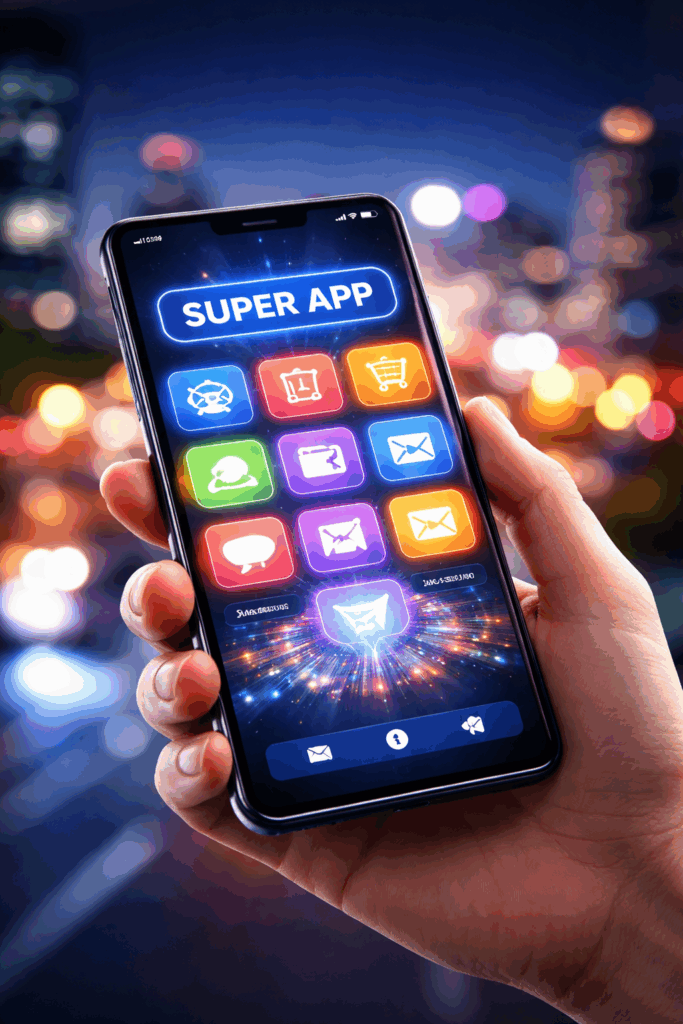
The Future of Mobile Apps: How Super Apps Are Changing the Digital Ecosystem

The mobile app industry is entering a new phase of evolution driven by the rapid growth of super apps. Unlike traditional applications that focus on a single function, super apps combine multiple services into one unified platform. Messaging, payments, shopping, transportation, entertainment, and financial services are all accessible within a single app environment.
Originally popular in Asia, super apps are now gaining traction globally as users demand convenience, speed, and seamless digital experiences. This article explores how super apps are reshaping the mobile ecosystem, why they are growing so fast, and what this trend means for the future of app technology.
Super apps are multifunctional platforms designed to replace dozens of individual applications. Instead of switching between apps, users can complete multiple tasks without leaving the ecosystem.
Their growth is driven by:
By centralizing services, super apps reduce friction, increase engagement, and become an essential part of users’ daily routines.
Super apps are successful because they deliver a cohesive and intuitive user experience. Some of their defining features include:
All services operate under a single login and interface, eliminating the need for repeated authentication and configuration.
Most super apps include built-in wallets that allow users to pay for services instantly, send money, and manage transactions securely.
Developers can build mini applications inside the super app, expanding functionality without requiring separate downloads.
Using AI and analytics, super apps tailor recommendations, offers, and content based on user behavior and preferences.
The rise of super apps is disrupting multiple industries simultaneously.
Banking, payments, loans, and insurance are integrated into daily activities, making financial management more accessible.
Shopping, order tracking, and customer support are embedded directly into the app, increasing conversion rates and customer loyalty.
Ride-hailing, food delivery, and logistics services operate within the same ecosystem, improving convenience and operational efficiency.
Streaming, gaming, messaging, and social networking coexist, keeping users engaged for longer periods.
With so many services consolidated into one platform, security becomes a critical concern. Leading super apps invest heavily in:
By prioritizing trust and transparency, super apps strengthen long-term user relationships and reduce adoption barriers.
Despite their advantages, super apps face several challenges:
Balancing simplicity with functionality remains one of the biggest challenges for super app developers.
The future of super apps points toward increased globalization and specialization. Rather than one universal platform, the market may evolve into industry-focused super apps tailored to finance, healthcare, travel, or business productivity.
Emerging technologies such as AI, blockchain, and 5G will further enhance performance, personalization, and security. As digital ecosystems become more interconnected, super apps are expected to play a central role in shaping mobile experiences worldwide.
Super apps represent a major shift in how mobile technology is designed and consumed. By combining multiple services into a single platform, they deliver convenience, efficiency, and personalized experiences that modern users increasingly expect.
As adoption expands beyond early markets, super apps are set to redefine the future of mobile applications, creating powerful digital ecosystems that go far beyond traditional app functionality.