Credit Score Tips That Can Save You Thousands of Dollars

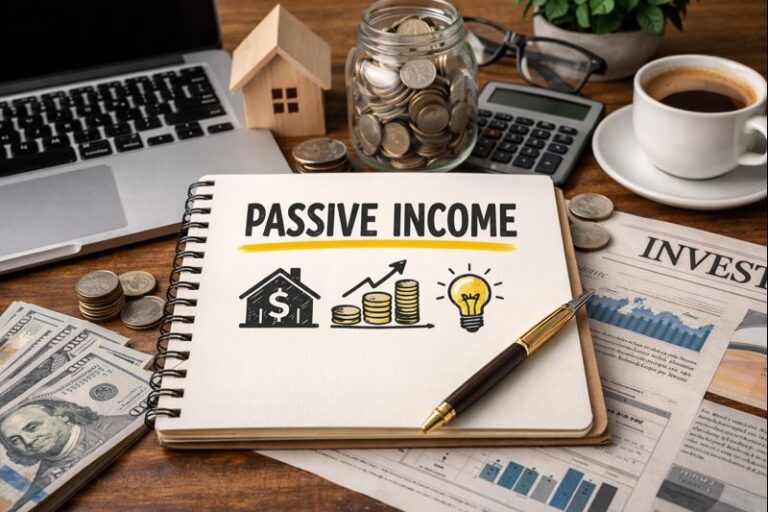
Building passive income has become a strategic objective for individuals seeking long-term financial stability and independence. Unlike active income, which depends on constant effort and time, passive income allows earnings to continue with minimal ongoing involvement once the initial system is established. However, not all passive income strategies are equally effective or sustainable. This article explores proven passive income ideas that are realistic, scalable, and aligned with modern digital and financial environments.
Passive income is often misunderstood as effortless money. In reality, most passive income streams require an upfront investment of time, capital, or expertise. The value of passive income lies not in the absence of work, but in the ability to decouple income from continuous labor. When structured correctly, passive income provides financial resilience, diversification, and greater control over one’s time.
A reliable passive income strategy should meet three essential criteria: sustainability, scalability, and risk management. Sustainable income continues over time without constant intervention. Scalable income has the potential to grow without proportional increases in effort. Risk-managed income is protected through diversification and informed decision-making. Understanding these principles is crucial before pursuing any passive income model.
Dividend-paying assets remain one of the most established forms of passive income. These investments distribute a portion of profits to shareholders on a regular basis, creating a predictable income stream. Common dividend-generating assets include stocks, exchange-traded funds, and real estate investment trusts.
The strength of dividend-based income lies in its compounding potential. Reinvesting dividends allows investors to gradually increase their holdings, leading to higher future payouts. This strategy favors patience and consistency over speculation. Selecting companies or funds with a history of stable payouts, strong financial fundamentals, and diversified revenue sources significantly reduces long-term risk.
Dividend income is particularly attractive to those seeking financial stability rather than rapid gains. While market fluctuations are inevitable, a well-diversified portfolio focused on income generation can serve as a dependable passive income foundation.
Creating digital products is a powerful and scalable passive income strategy. Once developed, digital assets can be sold repeatedly without additional production costs. Examples include eBooks, online courses, templates, stock media, and specialized software tools.
The success of digital products depends heavily on value and relevance. Products that solve specific problems or address niche audiences tend to perform better over time. Intellectual assets benefit from automation through digital platforms, enabling global distribution with minimal overhead.
Although the initial creation phase requires significant effort, maintenance is generally limited to updates and customer support. Over time, digital products can generate consistent income while establishing authority and credibility in a specific field.
Affiliate marketing is an effective passive income method when built on trust and high-quality content. This model involves promoting third-party products or services and earning commissions on successful referrals. Websites, blogs, and content platforms serve as the primary channels for affiliate income.
The key to sustainable affiliate marketing is relevance and transparency. Content must provide genuine value, such as detailed guides, comparisons, or educational resources. Search engine optimization plays a critical role in attracting organic traffic, which enhances long-term income potential.
Successful affiliate marketers focus on audience needs rather than aggressive promotion. By aligning content with user intent and recommending reputable products, affiliate income can become a stable and scalable passive revenue stream.
Rental income from physical or digital assets remains a cornerstone of passive income generation. Traditional rental properties provide consistent cash flow when managed efficiently. However, ownership responsibilities can be reduced through professional management services, transforming rental income into a more passive model.
Beyond physical real estate, digital rentals such as website leasing, domain monetization, and licensing intellectual property are increasingly popular. These models require less capital and offer greater flexibility. The common principle is asset ownership that generates recurring payments over time.
Risk mitigation is essential in rental-based income strategies. Diversification across asset types and locations reduces exposure to market volatility. When approached strategically, rental income offers both stability and long-term appreciation.
Relying on a single passive income source increases vulnerability to market changes and external disruptions. A diversified passive income portfolio balances risk while maximizing earning potential. Combining financial investments, digital assets, and content-based strategies creates multiple income streams that complement one another.
Consistency, education, and strategic reinvestment are critical to long-term success. Passive income is not a short-term solution but a structured financial approach. Those who focus on value creation, risk awareness, and scalability are more likely to achieve lasting results.
Ultimately, the most effective passive income ideas are those aligned with individual skills, resources, and long-term objectives. With careful planning and disciplined execution, passive income can become a reliable pillar of financial independence.